Autonomy
Autonomy at Wisconsin
Supports: Applied Artificial Intelligence · Contested Logistics
Autonomous systems are reshaping every domain — land, air, sea, and space — and the hardest problems are no longer just algorithms. They are trust, teaming, testing, and fielding. UW–Madison brings all four together: human-centered robotics research, federally designated proving grounds, physics-based simulation, and the human factors science of how people and machines work as one.
Embodied AI — engineering autonomous systems to enhance human capability and quality of life — is one of the College of Engineering’s six Engineering Moonshots.
Research Strengths
human-robot interaction · human-machine teaming · connected & automated vehicles · physics-based simulation · off-road autonomy · agricultural autonomy · human factors & trust in automation · AV testing & evaluation
Anchors & Assets
Robotics & Human-Machine Teaming
The People and Robots Laboratory leads human-centered research on how people and robots collaborate, from collaborative robots on the factory floor to human-robot teaming for aircraft manufacturing in partnership with NASA and Boeing, building the trust and interfaces autonomy depends on.
Proving Grounds & Testing
The Traffic Operations and Safety (TOPS) Laboratory leads the Wisconsin Automated Vehicle Proving Grounds — one of 10 proving grounds designated by the U.S. Department of Transportation — spanning a 400-acre test facility, a four-mile road circuit, and a connected-vehicle corridor through Madison itself.
Simulation Born at Wisconsin
The Simulation-Based Engineering Lab develops Project Chrono, an open-source physics engine born at UW–Madison and backed by U.S. Army investment — used by hundreds of organizations to model everything from Army trucks and tanks in off-road conditions to NASA lunar rovers. The lab’s annual MaGIC consortium draws the Army Research Office, national laboratories, and industry to Madison.
Human Factors & Trust in Automation
Industrial and systems engineering researchers study how humans trust, supervise, and adapt to automation — the science that determines whether autonomous systems succeed in the real world, and the discipline behind human-in-the-loop testing from driving simulators to human-machine teams.
The Future of Autonomy
Wisconsin’s autonomy story extends beyond campus. Regional initiatives envision Wisconsin and the Great Lakes corridor as a natural home for autonomous and maritime systems research, development, testing, evaluation, and manufacturing, pairing the state’s shipbuilding and manufacturing base with its research strength and test assets. WINS connects UW–Madison researchers, students, and partners to that statewide ecosystem.
From Classroom to Competition
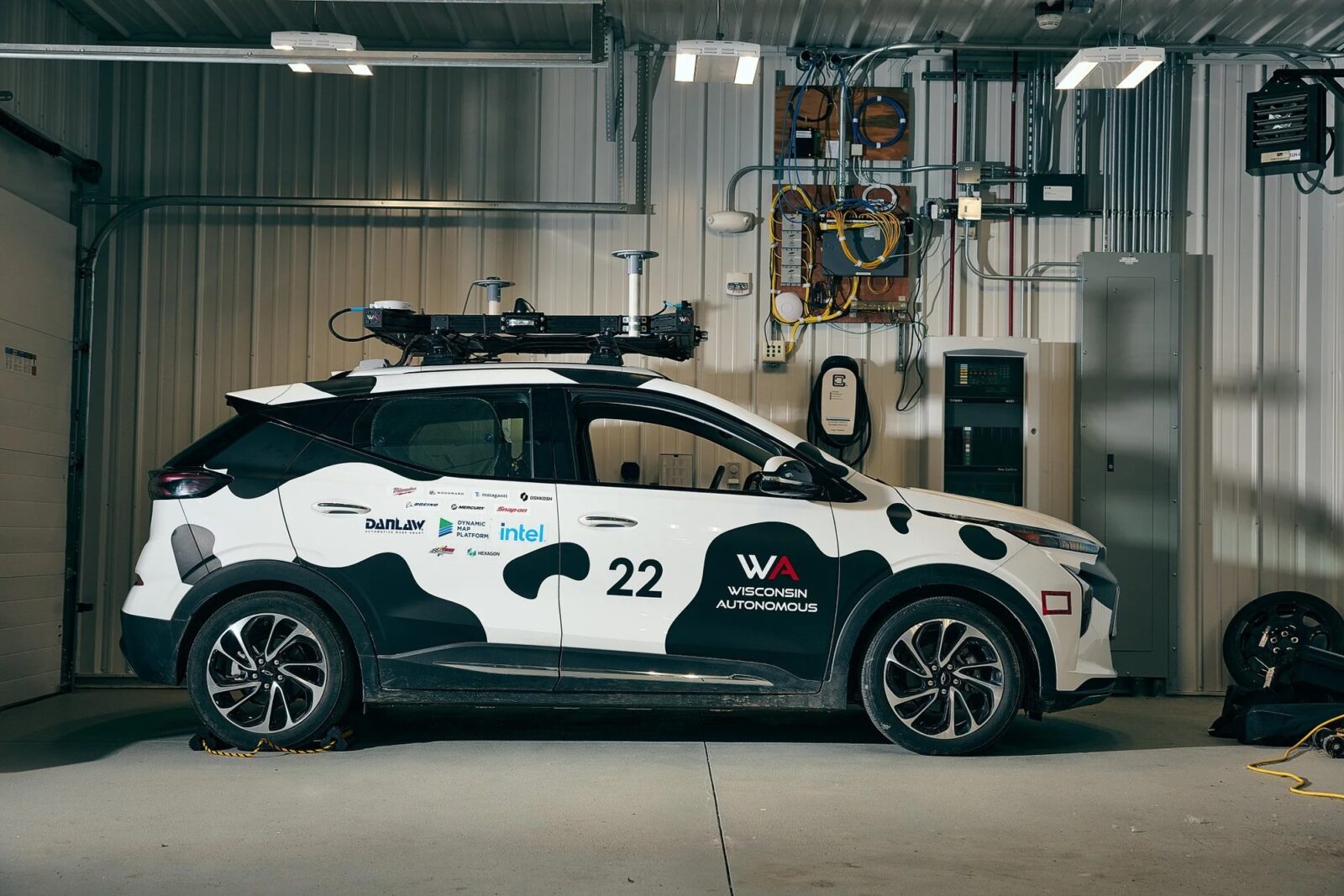
The autonomy workforce starts with students. Wisconsin Autonomous, a multidisciplinary team of more than 40 undergraduate and graduate students, designs and builds self-driving vehicles for national competition — currently the SAE and General Motors AutoDrive Challenge™ II, with a racing pedigree that includes the Indy Autonomous Challenge. Its alumni graduate having already built, tested, and fielded autonomous systems.
The Dual-Use Imperative
Autonomy built for the mission transforms civilian life. Collaborative robots raise manufacturing productivity and take on the most dangerous jobs. Automated vehicles promise safer roads and mobility for those who cannot drive. Agricultural autonomy helps farms do more with fewer hands. The simulation engine that models Army vehicles guides NASA rovers, construction equipment, and industrial machinery. The human-machine teaming science that makes military autonomy trustworthy makes workplace automation better partners with human operators.
Why It Matters
Autonomy is reshaping every domain of competition and conflict — from contested logistics and autonomous resupply to unmanned maritime systems to human-machine teams that multiply what every user can do. The decisive issues are trust, testing, and fielding at scale, and they are the questions Wisconsin research addresses.
WINS connects mission partners to Wisconsin’s autonomy researchers, proving grounds, and the statewide ecosystem ready to build what the mission needs.