Energy
Nuclear & Energy Systems
Supports: Installation & Strategic Energy Resilience · Contested Logistics
Energy assurance is mission assurance. UW–Madison’s leadership spans the full nuclear enterprise — fission and fusion, materials and manufacturing, experiment and policy, energy security and nuclear security alike — alongside deep strength in the power and grid systems that keep installations, industry, and communities running, and in the engines and propulsion systems that move the force.
Building sustainable energy and technical systems is a central theme of the campuswide RISE-EARTH initiative, aided by the cross-cutting RISE-AI — new faculty, infrastructure, and collaboration in this space.
Research Strengths
advanced nuclear technologies · thermal-hydraulics & molten salts · reactor modeling & safety analysis · nuclear materials & fuel cladding · nuclear nonproliferation & safeguards · radiation detection & material accountancy · safeguards by design · nuclear security policy & arms control · radiation science & isotope production · power electronics & electric machines · grid resilience & microgrids · energy storage · renewable integration · bio-based products, fuels & materials · fusion energy systems · combustion & propulsion · multi-fuel engine systems · AI & machine learning for energy
Related: Signature Strength
Fusion
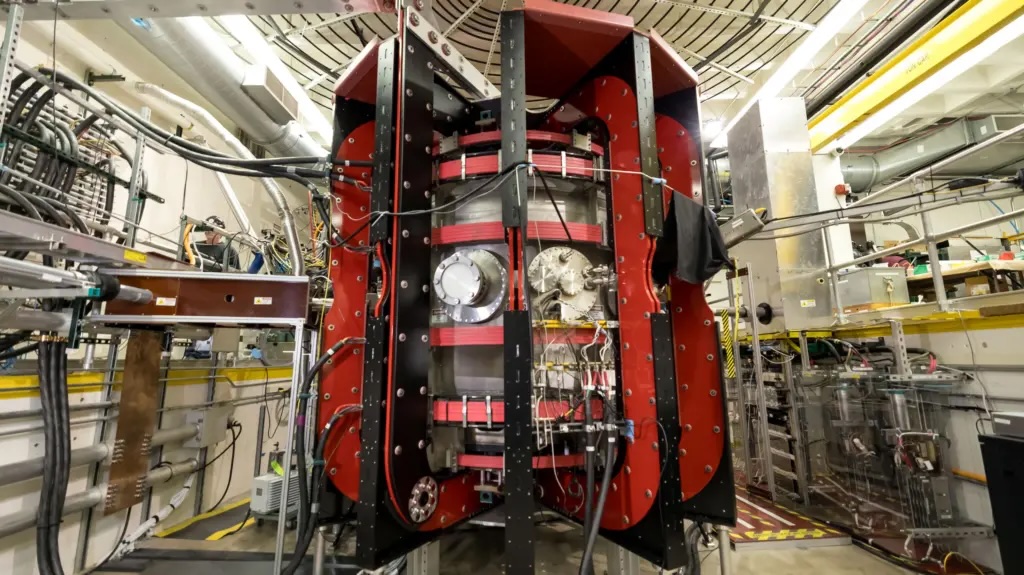
WHAM, Pegasus-III, HSX, and the fusion industry cluster: Wisconsin’s signature fusion portfolio, in depth. Explore Fusion →
Anchors & Assets
Wisconsin Energy Institute
The collaborative home of energy research and education at UW–Madison — more than 100 affiliated faculty spanning electricity systems, energy storage, and fuels — administered by the Office of the Vice Chancellor for Research and home to the Great Lakes Bioenergy Research Center, the Department of Energy’s first bioenergy research center on a university campus.
Nuclear Engineering Leadership
From experimental-scale reactors to materials that withstand the harshest reactor environments to component manufacturing, Wisconsin researchers advance both traditional fission and next-generation nuclear technologies. Assets include the University of Wisconsin Nuclear Reactor, a 1 megawatt research reactor operating on campus since 1961, where students run the controls and researchers nationwide come for irradiation testing, isotope production, and neutron imaging.
Fusion Energy
The signature fusion portfolio — multiple experimental devices and a growing spinoff cluster — doubles as strategic research for the nation’s energy future.
Power & Grid Systems
Longstanding programs in power electronics, electric machines, and power systems engineering address grid resilience and the electrification of everything the mission touches.
Advanced Fission
Institute for Nuclear Energy Systems (INES)
Teams of Wisconsin faculty tackling the hard problems of fission and fusion energy systems together: thermal-hydraulics across supercritical water, supercritical CO2, molten salts, liquid metals, and air; integrated safety analysis; and a dedicated laboratory for the environmental degradation of nuclear materials — because few environments punish materials like a reactor core.
Reactor Design & Modeling
The Reactor Technology Integration Group advances the cost competitiveness of nuclear energy through physics-based reactor design: coupled neutronics and thermal-hydraulics modeling of next-generation small reactors for the Nuclear Regulatory Commission, molten salt fast reactor simulation, and the techno-economic analysis that decides which designs get built.
Molten Salt Science
Wisconsin is a national center for the science behind molten salt reactors: leading the multi-institution NuSTEM program with Texas A&M, Berkeley, and Department of Energy laboratories, investigating salt chemistry and corrosion with Idaho National Laboratory and Westinghouse, and developing the supercritical power cycles and advanced fuel cladding that next-generation reactors require.
Nuclear Security & Nonproliferation
NNSA University Consortia
UW–Madison faculty are key investigators in three consortia funded by the National Nuclear Security Administration’s Office of Defense Nuclear Nonproliferation — including a leadership role in the Nuclear Science and Security Consortium, and participation in DNN TECH and the Consortium for Enabling Technologies and Innovation 2.0, where six Wisconsin faculty across five departments pursue tritium accountancy for fusion systems, quantum sensing, signatures of advanced manufacturing, quantum radiation detection, and remote sensing. Together the consortia train the next generation of nuclear security experts alongside the national laboratories.
Safety, Security & Safeguards by Design
Advanced reactors and their fuel cycles will be built with safety, security, and safeguards designed in from the start — not bolted on afterward. Wisconsin research on material accountancy, detection, and the 3S-by-design approach for next-generation systems, from molten salt and small modular reactors to fusion fuel cycles, gives the nonproliferation mission a seat at the design table. The university practices what it studies: its own research reactor was converted from highly enriched to low enriched uranium fuel under an NNSA threat reduction initiative.
Nuclear Policy & Arms Control
The Department of Nuclear Engineering and Engineering Physics counts energy policy and nuclear security among its core research areas. Faculty research on nuclear security and arms control connects the engineering to strategy and treaties, from verification technologies to policy analysis — and when Wisconsin’s legislature and governor sought guidance on new nuclear energy in the state, the department led the Wisconsin Nuclear Energy Siting Study with national laboratory partners.
Engines & Propulsion
Engine Research Center (ERC)
A world-leading engine research group since 1946, investigating the fundamental processes that govern combustion, efficiency, and emissions in engines — from advanced combustion strategies pioneered here to sprays, fuels, diagnostics and sensors, powertrain optimization, and simulation. The center also trains the engine workforce through a Master of Engineering in Engine Systems.
Altitude & Climatic Testing
The Army Research Laboratory partnered with the ERC to build the Altitude and Climatic Testing Laboratory, a unique facility that runs engines at aircraft altitude and in extreme heat and cold. It anchors a $4 million Army award, expandable to $8.5 million, to develop next-generation multi-fuel capable hybrid engine systems: advanced ignition, fuel-quality sensing, and control models that let Army vehicles and generators run on whatever fuel is available — demonstrated in an off-road vehicle. Fuel logistics are contested logistics, and engines that burn anything simplify the fight.
The Dual-Use Imperative
Energy resilience research pays civilian dividends immediately: grids that recover faster from storms, advanced nuclear power that delivers clean electricity, storage technologies that enable renewables and electric vehicles, microgrid designs that keep hospitals and airports running when the larger grid fails, and engine research that makes every truck, tractor, and generator cleaner and more efficient. Assured energy for the mission is reliable energy for everyone.
Why It Matters
Military installations, defense manufacturers, and AI infrastructure all need assured, resilient power. Advanced nuclear and grid research is national security research, and Wisconsin has pursued it for generations. So is the science of keeping nuclear material out of the wrong hands: the detection, accountancy, and safeguards research that enables nonproliferation. Any time must travel to the front, engines that run on any fuel, at any altitude, in any climate, are a logistics advantage.
WINS connects mission partners to Wisconsin’s energy researchers and facilities.