Quantum
Quantum Science at Wisconsin
Signature Strength · Supports: Quantum & Battlefield Information Dominance
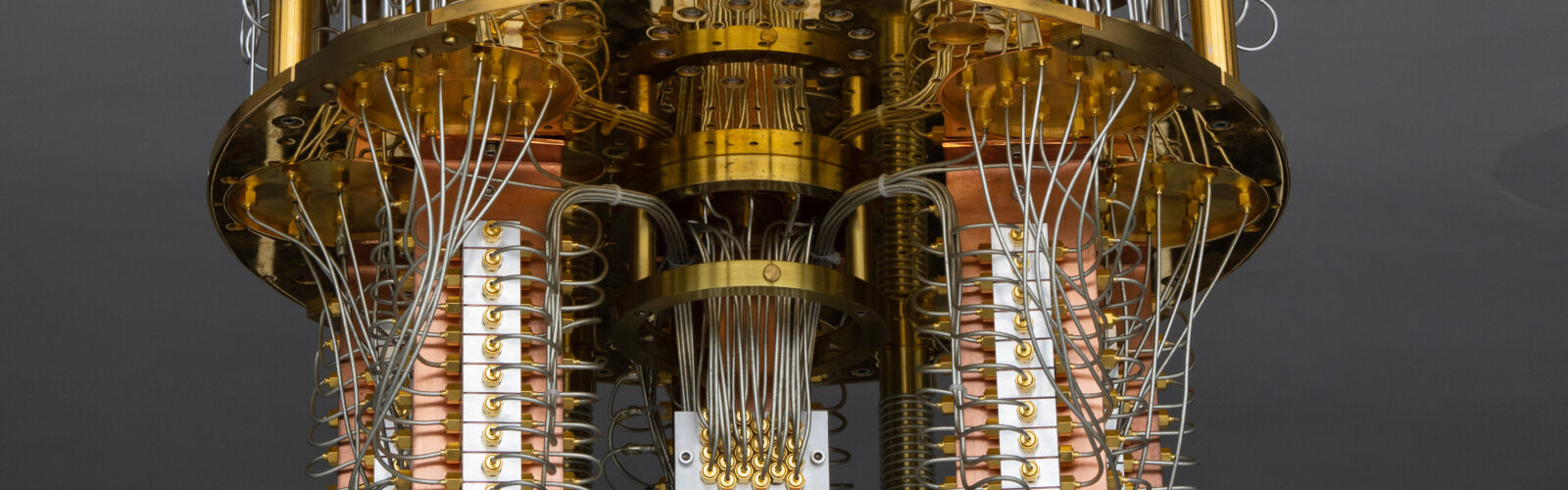
Quantum technologies will reshape computing, communication, and sensing — and with them, the balance of technological advantage. UW–Madison was among the earliest universities to invest seriously in quantum information science, and today its researchers work across major hardware platforms: superconducting qubits, neutral atoms, and semiconducting qubits.
Research Strengths
superconducting qubits · neutral atoms · semiconducting qubits · quantum sensing & navigation · quantum networking and communication · quantum materials · quantum algorithms · quantum applications · quantum fabrication & manufacturing
Anchors & Alliances
Wisconsin Quantum Institute
The Wisconsin Quantum Institute (WQI) works to solve problems and advance our understanding of the physical world using the methods of quantum science and technology. WQI is the hub of quantum research on campus, connecting faculty across physics, engineering, chemistry, and computer sciences and coordinating the university’s quantum research, education, and industry engagement.
Chicago Quantum Exchange
UW–Madison is a founding member of one of the largest quantum research collaborations in the world, the Chicago Quantum Exchange (CQE), alongside the University of Chicago, Argonne National Laboratory, Fermilab, the University of Illinois, Northwestern, and Purdue. CQE leads Bloch Quantum, the federally designated Tech Hub transitioning the U.S. quantum sector to scaled manufacturing.
National Quantum Programs
Wisconsin researchers are partners in the NSF Quantum Leap Challenge Institute for Hybrid Quantum Architectures and Networks (HQAN) and the Department of Energy’s Q-NEXT quantum information science center — flagship efforts under the National Quantum Initiative — and, through the LPS Qubit Collaboratory, partnerships with Intel and HRL Laboratories on semiconductor quantum computing.
Quantum Economic Development Consortium
UW–Madison is a member of QED•C — the industry-driven consortium called for by the National Quantum Initiative Act, managed by SRI International with support from NIST, and uniting more than 250 members, including 130-plus U.S. companies across the quantum supply chain, with national laboratories, universities, and federal agencies to build a robust American quantum industry.
From Lab to Industry
Wisconsin’s quantum research is seeding a quantum industry. Dirac Labs, a UW–Madison spinoff, is developing quantum sensors for navigation in GPS-denied environments. Qolab, co-founded by 2025 Nobel laureate in physics John Martinis, builds superconducting quantum computers with deep UW–Madison research ties. And Infleqtion‘s collaboration with UW–Madison researchers recently demonstrated qubit measurement with 99.93 percent reliability — a key step toward scalable quantum computing.
In 2026, UW–Madison, in collaboration with the Wisconsin Technology Council, launched the Wisconsin Quantum Alliance (WQA) to marshal the state’s quantum resources and expertise — connecting researchers, startups, and industry as Wisconsin competes for a leading role in the emerging quantum economy.
The Dual-Use Imperative
The quantum technologies developed for security will remake civilian life. Quantum computers promise breakthroughs in drug discovery, materials design, and logistics. Quantum sensors point toward earlier medical diagnoses, better navigation for aviation, and precision timing for the power grid and financial markets. And post-quantum cryptography will protect everyone’s data, including bank records and medical files, as well as the government’s.
Why It Matters
Quantum computing threatens today’s encryption and promises tomorrow’s computational advantage. Quantum sensors offer navigation without GPS and detection beyond classical limits. Quantum networks point toward fundamentally secure communication. Leadership in each begins with the science — and the trained quantum workforce — that universities like Wisconsin produce.
WQI connects mission partners to Wisconsin’s quantum researchers, facilities, and students — from sponsored research to workforce pipelines.