AI
AI & Data Science at Wisconsin
Supports: Applied Artificial Intelligence
Artificial intelligence is remaking how decisions are made, how systems operate, and how science itself is done. UW–Madison is on the leading edge of grappling with the complexity of AI.
Artificial intelligence was the first focus of the campuswide Wisconsin RISE Initiative — with RISE-AI more than doubling the university’s investment in AI and related fields.
Launched in 2026, the College of Computing & Artificial Intelligence unites computer sciences, statistics, and information science in one of the nation’s premier computing research communities. The university’s computing infrastructure has powered discovery at global scale for decades.
Research Strengths
machine learning · statistical inference · natural language processing · computer vision · optimization · operations research & decision science · data systems & databases · AI systems & infrastructure · high-throughput computing · human-centered technology
Anchors & Assets
College of Computing & Artificial Intelligence (CAI)
Bringing together the Department of Computer Sciences, the Department of Statistics, and the Information School with research spanning machine learning, AI systems, statistical inference, and human-centered technology.
Data Science Institute (DSI)
A campus hub for data science research and partnership, connecting methods innovation with applications across science, industry, and public mission. DSI is also home to the RISE-AI Collaboration HQ, the Open Source Program Office, and the Data Center Working Group.
Center for High Throughput Computing (CHTC)
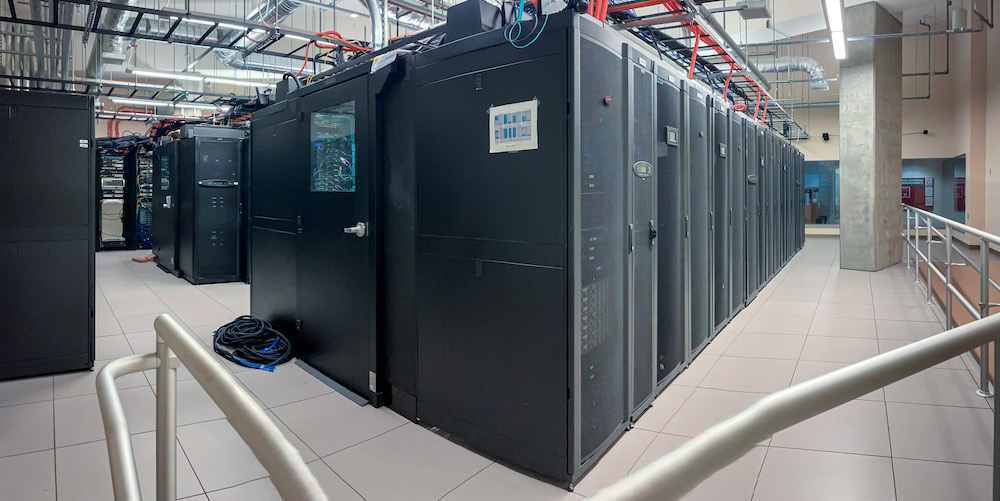
UW–Madison’s core research computing center and the home of the HTCondor software suite — computing infrastructure pioneered at Wisconsin that has powered research worldwide, including Nobel Prize–winning physics discoveries.
Industrial & Systems Engineering (ISyE)
Operations research and decision analytics for national security problems: optimizing emergency response, aviation and border screening, critical infrastructure resilience, cyber risk, and the logistics and workforce systems that keep missions running.
The Dual-Use Imperative
The same AI advances that deliver decision advantage transform civilian life: machine learning that improves medical diagnosis, autonomy that makes transportation safer, models that sharpen weather forecasts and crop yields, and data systems that speed disaster response. AI research done in the open — the university way — spreads its benefits to every sector of the economy.
Why It Matters
From decision advantage and trusted autonomy to AI-accelerated science, applied AI is the connective tissue of every modern mission. Wisconsin brings the algorithms, the statistics, the systems expertise, and the computing infrastructure to move AI from promise to fielded capability — and trains the workforce that will operate it.
WINS connects mission partners to Wisconsin’s AI researchers, computing infrastructure, and talent pipeline.
Research Leads
The faculty who lead this domain’s engagement with mission partners. Contact WINS to be connected.